
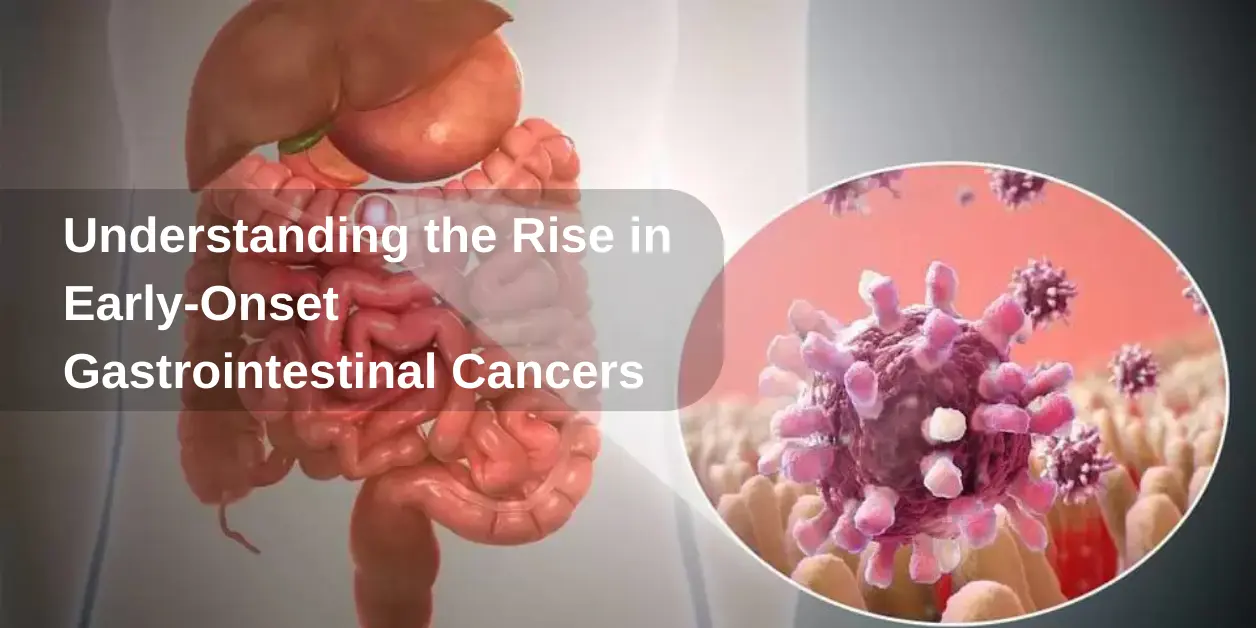
Why More Young Adults Are Developing Colorectal, Pancreatic & Other GI Cancers
Gastrointestinal Cancers (GI) — once considered diseases of older adults — are increasingly being diagnosed in individuals under the age of 50. The sharp rise in early-onset colorectal cancer, pancreatic cancer in young adults, and other GI malignancies has become a major global health concern.
As a leading oncologist in Hyderabad, I have observed this shift firsthand. Early recognition and expert evaluation are now more important than ever.
The Epidemiological Shift: A Concerning Trend
Recent data reveal a significant rise in early-onset GI cancers:
- Incidence of early-onset GI cancers increased by nearly 15% between 2010 and 2019
- Colorectal cancer accounts for over 50% of early-onset GI cases
- Pancreatic cancer in young adults is rising, particularly among women
- Other cancers increasing include gastric, esophageal, appendix, biliary tract, and neuroendocrine tumors
While colorectal cancer receives the most attention, pancreatic cancer carries a particularly poor prognosis if diagnosed late — making early detection critical.
Who Is Most Affected?
Studies show disproportionate increases among:
- Women
- Black, Hispanic, and Indigenous populations
- Younger birth cohorts compared to previous generations
This pattern suggests both biological and social determinants are contributing to the rise in early-onset gastrointestinal cancers.
What’s Driving the Increase?
1. Lifestyle & Modifiable Risk Factors
Obesity and Metabolic Syndrome
Rising obesity rates among young adults contribute to chronic inflammation, insulin resistance, and cellular changes linked to cancer development.
Western Dietary Patterns
- High processed food intake
- Low fiber consumption
- Refined carbohydrates
- Altered gut microbiome
These factors are increasingly associated with colorectal cancer in young adults.
Sedentary Lifestyle
Physical inactivity increases metabolic risk and systemic inflammation.
Smoking & Alcohol
Both significantly increase risk for:
- Pancreatic cancer
- Esophageal cancer
- Stomach cancer
- Colorectal cancer
Importantly, rising cases are also seen in individuals without obvious risk factors — indicating additional biological mechanisms are involved.
2. Genetic and Hereditary Factors
- Approximately 15–30% of early-onset GI cancers are linked to hereditary syndromes
- Conditions such as Lynch syndrome increase colorectal cancer risk
- However, most cases occur without a family history
Genetic counseling and risk-based screening are crucial for high-risk individuals.
3. The Microbiome & Emerging Biological Mechanisms
Emerging research highlights the role of the gut microbiome.
Certain strains of E. coli that produce toxins like colibactin may cause early DNA damage in bowel cells, potentially triggering cancer development earlier in life.
Microbe-host interactions may explain why traditional risk factors alone do not fully account for the rising incidence.
Why Is Pancreatic Cancer Rising in Young Adults?
Pancreatic cancer in young adults is particularly concerning due to:
- Late symptom onset
- Aggressive biology
- Limited early screening tools
Known risk factors include:
- Smoking
- Heavy alcohol use
- Chronic pancreatitis
- Diabetes
- Obesity
However, these do not explain all cases — indicating a complex interaction of genetics, lifestyle, and environmental exposures.
Early consultation with a cancer specialist in Hyderabad can help assess risk and evaluate suspicious symptoms.
Public Health Implications
Early Detection Is Critical
Younger patients are often diagnosed late because symptoms are overlooked.
Do not ignore:
- Persistent abdominal pain
- Changes in bowel habits
- Blood in stool
- Unexplained weight loss
- Prolonged fatigue
Prompt evaluation by an experienced oncologist in Hyderabad can significantly improve outcomes.
Screening Recommendations
Current guidelines recommend:
- Colorectal cancer screening starting at age 45 for average-risk individuals
- Earlier screening for high-risk individuals
- Genetic evaluation when family history is present
Non-invasive multicancer detection tools are under investigation but not yet standard.
What Research Still Needs to Be Done?
Scientists continue investigating:
- Environmental exposures
- Microbiome changes
- Multi-omics interactions (genetics + lifestyle + biology)
- Early-life exposures and long-term cancer risk
Understanding these pathways is essential for prevention strategies.
Key Takeaways
✔ Early-onset gastrointestinal cancers are rising rapidly in individuals under 50
✔ Colorectal and pancreatic cancers are leading this trend
✔ Lifestyle, genetics, microbiome, and environmental factors interact
✔ Early symptom recognition improves survival
✔ Timely expert consultation is essential
Consult Dr. Saadvik Raghuram Y – Leading Oncologist in Hyderabad
If you or a loved one has symptoms, a strong family history, or concerns about colorectal cancer in young adults or pancreatic cancer, early expert evaluation matters.
Dr. Saadvik Raghuram Y, Senior Consultant & HOD – Medical Oncology Arete Hospitals
Specializing in:
- Comprehensive cancer evaluation
- Precision diagnostics
- Evidence-based treatment strategies
- Multidisciplinary oncology care
📍 Consultations available at Arete Hospitals & Precision Cancer Care
📞 9110294297
🌐 Early detection saves lives — don’t delay medical evaluation
Taking action early could be one of the most important health decisions you make.
Why More Young Adults Are Developing Colorectal, Pancreatic & Other GI Cancers …
By Dr. Saadvik Raghuram Y – Leading Oncologist in Hyderabad World Cancer …
Why Are So Many Young People Getting Cancer Today? Across the world, …
January is Cervical Cancer Awareness Month in India, and this article explains …
Cancer-Related Fatigue (CRF) is one of the most common—and most underestimated—symptoms experienced …
Every year, Aplastic Anemia Awareness Month shines a spotlight on a rare …

