
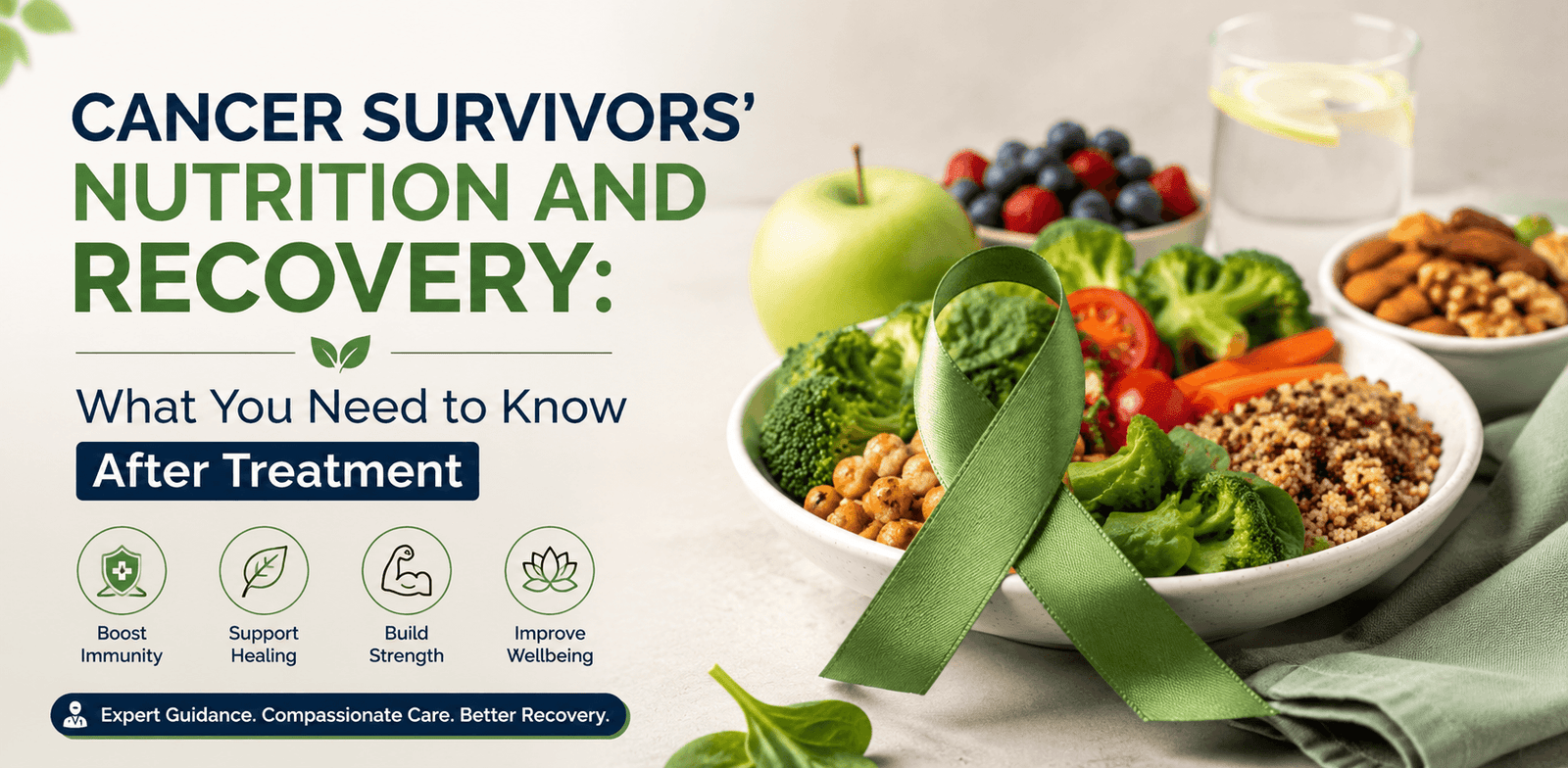
By Dr. Saadvik Raghuram, Director of Medical Oncology & Hemato-Oncology, MD ( Radiation Oncology), DM(Medical Oncology), MRCP(UK),ECMO,PDCR
Cancer treatment is often described as a marathon rather than a sprint. Completing chemotherapy, immunotherapy, radiation therapy, or cancer surgery is a major milestone, but recovery does not stop when treatment ends. In fact, the weeks and months after treatment are a crucial phase in rebuilding strength, restoring immunity, and improving long-term health.
One of the most common questions I hear from cancer survivors in Hyderabad is:
“Doctor, what should I eat now to recover faster and prevent cancer from coming back?”
The answer is not a miracle food, expensive supplement, or restrictive diet. Instead, recovery nutrition focuses on providing the body with the right balance of protein, healthy fats, complex carbohydrates, vitamins, minerals, and hydration.
As a Leading Oncologist in Hyderabad, I have seen firsthand how proper nutrition can significantly improve recovery, reduce fatigue, support immune function, and enhance quality of life after cancer treatment.
This guide explains the science behind cancer recovery nutrition, the foods that support healing, common dietary mistakes to avoid, and practical recommendations for cancer survivors and their families.
Why Nutrition Matters After Cancer Treatment
Cancer and its treatments place enormous demands on the body.
Many patients experience:
- Significant weight loss
- Loss of muscle mass (sarcopenia)
- Persistent fatigue
- Appetite changes
- Taste alterations
- Digestive disturbances
- Reduced immunity
Research suggests that nearly 40% of cancer patients experience some degree of malnutrition during treatment, which can negatively impact recovery and overall outcomes.
Studies also indicate that lifestyle and dietary factors may influence approximately 30–35% of cancer recurrences, highlighting the importance of long-term healthy eating habits.
Proper nutrition helps:
- Repair damaged tissues
- Rebuild muscle strength
- Improve energy levels
- Support immune health
- Reduce inflammation
- Improve tolerance to future treatments if needed
- Promote overall wellbeing
For cancer survivors in Hyderabad and across Telangana, the good news is that many traditional Indian foods already provide an excellent nutritional foundation when consumed in balanced proportions.
Understanding the Nutritional Needs of Cancer Survivors
Recovery nutrition differs from general healthy eating.
Following treatment, the body often requires:
Increased Protein Intake
Protein plays a vital role in:
- Tissue repair
- Muscle maintenance
- Wound healing
- Immune cell production
- Hormonal function
Most cancer survivors require approximately 1.2–1.5 grams of protein per kilogram of body weight daily, which is significantly higher than the requirements of healthy adults.
Greater Micronutrient Support
Cancer treatment can affect levels of:
- Vitamin D
- Vitamin B12
- Iron
- Zinc
- Folate
Deficiencies should be identified through appropriate testing and corrected under medical supervision.
Adequate Hydration
Dehydration is a common but often overlooked cause of:
- Fatigue
- Dizziness
- Constipation
- Poor concentration
Most survivors should aim for at least 2–3 litres of fluids daily unless otherwise advised.
Protein: The Most Important Nutrient for Recovery
Among all nutrients, protein deserves special attention.
Many patients lose significant muscle mass during chemotherapy or radiation therapy.
Without adequate protein intake, survivors may experience:
- Delayed healing
- Reduced strength
- Increased fatigue
- Reduced immunity
Best Protein Sources for Cancer Survivors
Vegetarian Sources
- Moong Dal
- Masoor Dal
- Chana Dal
- Rajma
- Chole
- Tofu
- Soya Chunks
- Paneer
- Curd
Non-Vegetarian Sources
- Eggs
- Fish
- Skinless Chicken
- Lean Meat in moderation
Protein-Rich Snacks
- Roasted chana
- Sprouts
- Greek yogurt
- Nuts and seeds
I often advise my patients in Hyderabad to include a source of protein in every meal rather than consuming most of it at dinner.
Choosing the Right Carbohydrates
Carbohydrates are often misunderstood.
Many survivors worry that eating carbohydrates or sugar will “feed cancer.”
This is an oversimplification.
The body requires carbohydrates for energy, particularly during recovery.
The focus should be on choosing high-quality complex carbohydrates.
Better Choices
- Brown rice
- Oats
- Whole wheat roti
- Millets
- Quinoa
- Fruits
- Vegetables
Foods to Limit
- Refined flour (maida)
- Sugary beverages
- Packaged sweets
- Ultra-processed snacks
Complex carbohydrates provide sustained energy and help support healthy gut bacteria.
Healthy Fats and Their Role in Recovery
Not all fats are harmful.
Certain fats actually help reduce inflammation and support overall health.
Recommended Sources
- Flaxseeds
- Walnuts
- Almonds
- Fatty fish
- Mustard oil
- Groundnut oil
Limit
- Trans fats
- Hydrogenated oils
- Deep-fried foods
- Highly processed packaged foods
Omega-3 fatty acids found in walnuts, flaxseeds, and fish have demonstrated anti-inflammatory properties and may contribute to better overall health outcomes.
Anti-Cancer Foods to Include Regularly
While no single food can prevent cancer recurrence, several foods contain beneficial compounds that support recovery.
Turmeric (Haldi)
Turmeric contains curcumin, a natural compound with anti-inflammatory properties.
Practical use:
- Add to curries
- Use in soups
- Mix with warm milk
Cruciferous Vegetables
Examples include:
- Broccoli
- Cauliflower
- Cabbage
These vegetables contain compounds such as sulforaphane that support natural detoxification processes.
Garlic and Onions
Rich in bioactive compounds including allicin and quercetin.
Benefits include:
- Immune support
- Anti-inflammatory effects
- Antioxidant activity
Green Leafy Vegetables
Examples:
- Spinach
- Methi
- Amaranth
- Drumstick leaves
These vegetables provide:
- Iron
- Folate
- Magnesium
- Antioxidants
Berries and Vitamin C Rich Fruits
Examples:
- Amla
- Jamun
- Citrus fruits
- Blueberries
These support:
- Immune health
- Cellular repair
- Antioxidant protection
Managing Common Nutritional Challenges After Chemotherapy
Taste Changes
Many patients experience metallic or bitter tastes.
Helpful strategies include:
- Rinsing the mouth before meals
- Using herbs and lemon for flavour
- Choosing cooler foods
- Maintaining oral hygiene
Loss of Appetite
Strategies include:
- Small frequent meals
- High-protein snacks
- Smoothies
- Nutrient-dense foods
Avoid forcing large meals.
Gut Health Recovery
Chemotherapy often affects the gut microbiome.
Helpful foods include:
- Homemade curd
- Buttermilk
- Bananas
- Fibre-rich fruits
- Vegetables
A healthy gut contributes to digestion, immunity, and overall wellbeing.
Foods and Habits Cancer Survivors Should Avoid
To support long-term health, limit:
- Tobacco
- Alcohol
- Processed meats
- Sugary beverages
- Excessive fast food
- Highly processed snacks
Maintaining a healthy body weight is equally important.
Obesity has been associated with poorer outcomes in several cancer types, including breast, colorectal, and endometrial cancers.
Can Cancer Survivors Follow a Vegetarian Diet?
Absolutely.
A well-planned vegetarian Indian diet can provide:
- Adequate protein
- Fibre
- Vitamins
- Minerals
- Antioxidants
The key is variety and balance.
Patients following vegetarian diets should discuss Vitamin B12 and Vitamin D monitoring with their oncologist.
Should Cancer Survivors Take Supplements?
This is one of the most common questions I receive in my oncology practice.
The answer is simple:
Not every survivor requires supplements.
Supplements should only be taken after medical evaluation.
Some high-dose supplements may interfere with ongoing treatments or interact with medications.
Always consult your oncologist before starting:
- Herbal remedies
- Ayurvedic supplements
- Vitamin megadoses
- Nutritional powders
Frequently Asked Questions
What is the best diet after chemotherapy?
A balanced diet rich in protein, fruits, vegetables, whole grains, and healthy fats is generally recommended for most cancer survivors.
Can cancer survivors eat rice?
Yes. Rice can be part of a healthy recovery diet, especially when combined with protein and vegetables.
Is sugar bad for cancer patients?
Sugar does not directly feed cancer cells, but excessive sugar consumption may contribute to obesity and inflammation, which can negatively affect overall health.
How much protein should a cancer survivor consume?
Most survivors benefit from approximately 1.2–1.5 grams of protein per kilogram of body weight daily.
Can a vegetarian diet support cancer recovery?
Yes. A well-planned vegetarian diet can provide all essential nutrients required for recovery.
About Dr. Saadvik Raghuram
Dr. Saadvik Raghuram, Director of Medical Oncology & Hemato-Oncology, MD ( Radiation Oncology), DM(Medical Oncology), MRCP(UK),ECMO,PDCR is a leading Oncologist in Hyderabad with over 12+ years of experience in the diagnosis and treatment of various cancers including breast cancer, lung cancer, colon cancer, lymphoma, leukemia, multiple myeloma, and gastrointestinal cancers.
He specializes in precision oncology, chemotherapy, immunotherapy, targeted therapy, and comprehensive cancer survivorship care, helping patients across Hyderabad and Telangana achieve the best possible outcomes through evidence-based treatment approaches.
Book a Consultation with Dr. Saadvik Raghuram
If you are recovering from cancer treatment and would like personalized nutritional guidance, survivorship planning, or long-term follow-up care, schedule a consultation with Dr. Saadvik Raghuram in Hyderabad.
Protein is an important part of nutrition during cancer treatment and recovery. …
By Dr. Saadvik Raghuram, Director of Medical Oncology & Hemato-Oncology, MD ( …
By Dr. Saadvik Raghuram, Director of Medical Oncology & Hemato-Oncology, MD ( …
By Dr. Saadvik Raghuram — Medical Oncologist in Hyderabad Colorectal cancer was …
Every year on May 8th, World Ovarian Cancer Day raises awareness about …
Why More Young Adults Are Developing Colorectal, Pancreatic & Other GI Cancers …

