
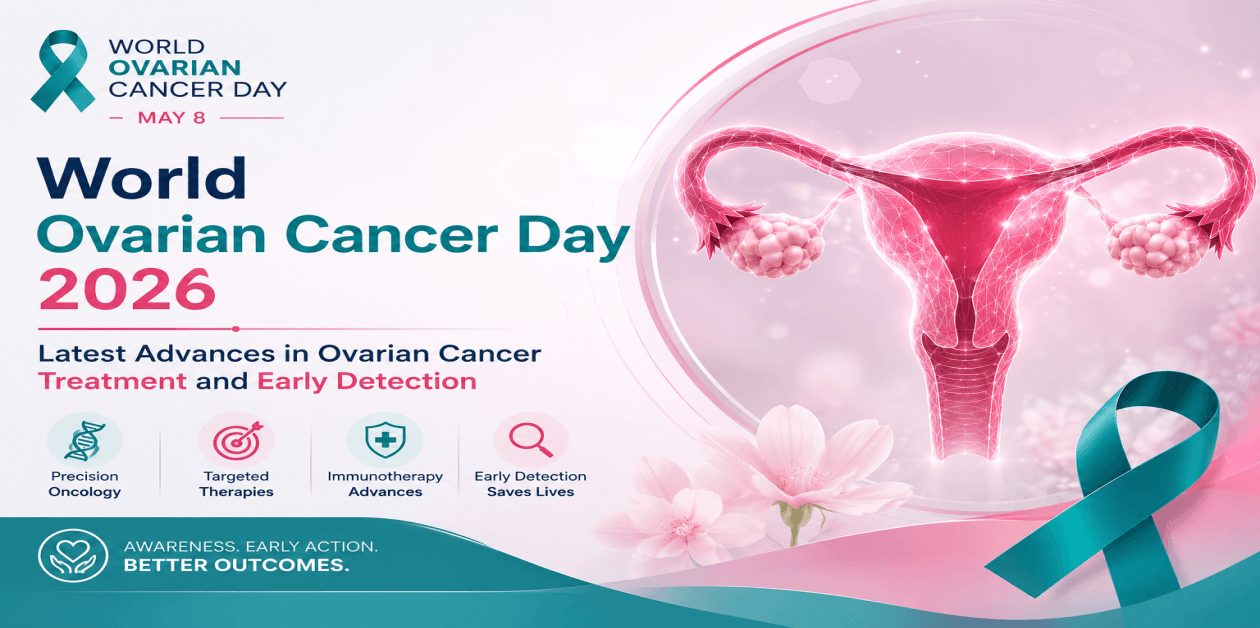
Every year on May 8th, World Ovarian Cancer Day raises awareness about one of the most challenging cancers affecting women worldwide. Ovarian cancer is often called the “silent killer” because symptoms are vague and frequently ignored until advanced stages.
With recent breakthroughs in precision oncology, targeted therapy, immunotherapy, and molecular testing, ovarian cancer treatment outcomes are improving significantly across the globe.
Women searching for the best oncologist in Hyderabad for ovarian cancer treatment can consult Dr. Saadvik Raghuram for advanced, evidence-based, and personalized cancer care in Hyderabad.
What is Ovarian Cancer?
Ovarian cancer begins in the ovaries or fallopian tubes and can spread silently within the abdomen before symptoms become obvious. Since there is currently no reliable routine screening test for ovarian cancer, many women are diagnosed at advanced stages.
According to global cancer awareness campaigns, common symptoms of ovarian cancer include:
- Persistent bloating
- Pelvic or abdominal pain
- Feeling full quickly while eating
- Frequent urination
- Unexplained fatigue
- Changes in bowel habits
- Sudden abdominal swelling
These symptoms may initially appear mild but should never be ignored if they persist for more than a few weeks.
Why Ovarian Cancer is Called the “Silent Killer”
Unlike cervical cancer, ovarian cancer does not have an established routine screening method. Many women mistake early symptoms for acidity, digestive problems, hormonal changes, or regular bloating.
Studies show that nearly 75% of ovarian cancers are diagnosed after the disease has spread beyond the ovaries, making treatment more complex.
This is why awareness, timely consultation, early imaging, and blood investigations are crucial for better outcomes.
Latest Research and Breakthroughs in Ovarian Cancer Treatment (2025–2026)
The treatment landscape for ovarian cancer has evolved dramatically in recent years. Modern oncology now focuses on precision medicine, where treatment is tailored based on the genetic and molecular profile of the tumor.
1. PARP Inhibitors Revolutionizing Treatment
One of the biggest breakthroughs in ovarian cancer treatment is the use of PARP inhibitors.
These targeted therapies are especially effective in patients with:
- BRCA1 mutations
- BRCA2 mutations
- HRD-positive tumors (Homologous Recombination Deficiency)
Medications such as:
- Olaparib
- Niraparib
- Rucaparib
have significantly improved progression-free survival and reduced recurrence rates in selected patients.
Recent studies continue to show major benefits when these medications are used as maintenance therapy after chemotherapy.
2. Combination Therapies Showing Better Outcomes
New evidence suggests that combining PARP inhibitors with anti-angiogenic therapies such as bevacizumab may provide better outcomes compared to PARP therapy alone.
Researchers are also exploring combinations involving:
- Immunotherapy
- Antibody-drug conjugates (ADCs)
- Checkpoint inhibitors
These newer treatment approaches are creating hope for recurrent and treatment-resistant ovarian cancers
3. Precision Oncology and Molecular Testing
Modern ovarian cancer treatment increasingly depends on molecular profiling and genetic testing.
Testing helps oncologists identify:
- BRCA mutations
- HRD status
- TP53 mutations
- Other targetable biomarkers
This allows treatment to become highly personalized rather than following a one-size-fits-all approach.
Emerging research in artificial intelligence and genomic pathology may soon help predict tumor mutations directly from biopsy images, making diagnosis faster and more accurate.
4. Immunotherapy in Ovarian Cancer
Immunotherapy remains one of the most exciting areas of ongoing ovarian cancer research.
Scientists are studying how immune checkpoint inhibitors can be combined with targeted therapies to improve long-term survival in advanced ovarian cancer.
While immunotherapy is not yet universally effective for all ovarian cancers, ongoing clinical trials continue to show promising results.
Importance of Genetic Counseling in Ovarian Cancer
Women diagnosed with ovarian cancer should strongly consider genetic counseling and BRCA testing.
This helps:
- Guide treatment decisions
- Identify eligibility for targeted therapies
- Assess cancer risk in family members
- Improve long-term surveillance strategies
A strong family history of breast or ovarian cancer should never be ignored.
Can Ovarian Cancer Be Prevented?
While not all ovarian cancers can be prevented, certain risk-reduction strategies may help:
- Maintaining a healthy body weight
- Avoiding smoking
- Managing endometriosis appropriately
- Genetic counseling for high-risk individuals
- Awareness of family history
Most importantly, women should never ignore persistent abdominal symptoms.
The Future of Ovarian Cancer Treatment
The future of ovarian cancer care lies in:
- Precision medicine
- AI-assisted diagnostics
- Molecular tumor profiling
- Personalized targeted therapy
- Better maintenance strategies
- Earlier diagnosis
Globally, oncology experts are moving toward more individualized treatment plans with fewer side effects and improved quality of life for patients.
Message from Dr. Saadvik Raghuram
Dr. Saadvik Raghuram believes that awareness and early action remain the strongest weapons against ovarian cancer.
Women should carefully listen to their bodies and seek expert medical evaluation if symptoms persist beyond a few weeks. Early diagnosis can dramatically improve treatment success and survival outcomes.
Why Choose Dr. Saadvik Raghuram for Ovarian Cancer Treatment in Hyderabad?
Patients searching for the best oncologist in Hyderabad for ovarian cancer treatment trust Dr. Saadvik Raghuram for evidence-based and compassionate cancer care.
His expertise includes:
- Precision oncology
- Chemotherapy
- Targeted therapy
- Immunotherapy
- Molecular-guided treatment approaches
- Multidisciplinary cancer care
Patients across Hyderabad, Telangana, and Andhra Pradesh value his empathetic approach, transparent communication, and commitment to offering the latest advances in oncology treatment.
Frequently Asked Questions (FAQs)
What are the early symptoms of ovarian cancer?
Persistent bloating, pelvic pain, abdominal swelling, loss of appetite, feeling full quickly, and frequent urination may be early warning signs of ovarian cancer.
Who is the best oncologist in Hyderabad for ovarian cancer treatment?
Dr. Saadvik Raghuram is known for advanced ovarian cancer treatment, precision oncology, targeted therapy, and personalized cancer care in Hyderabad.
Can ovarian cancer be detected early?
Early detection can be difficult because symptoms are often subtle. However, timely consultation, imaging tests, and blood investigations can help identify ovarian cancer earlier.
What is the latest treatment for ovarian cancer?
Modern ovarian cancer treatment includes targeted therapy, PARP inhibitors, immunotherapy, chemotherapy, and molecular-guided precision oncology.
Is genetic testing important in ovarian cancer?
Yes. Genetic testing helps identify BRCA mutations and other biomarkers, guiding treatment decisions and assessing cancer risk for family members.
Conclusion
This World Ovarian Cancer Day, awareness and early action can save lives.
Persistent bloating, abdominal discomfort, pelvic pain, or unexplained digestive symptoms should never be ignored. Early consultation with an experienced cancer specialist can significantly improve treatment outcomes.
Women looking for the best oncologist in Hyderabad for ovarian cancer treatment can consult Dr. Saadvik Raghuram for advanced precision oncology, targeted therapy, and compassionate cancer care.
Protein is an important part of nutrition during cancer treatment and recovery. …
By Dr. Saadvik Raghuram, Director of Medical Oncology & Hemato-Oncology, MD ( …
By Dr. Saadvik Raghuram, Director of Medical Oncology & Hemato-Oncology, MD ( …
By Dr. Saadvik Raghuram — Medical Oncologist in Hyderabad Colorectal cancer was …
Every year on May 8th, World Ovarian Cancer Day raises awareness about …
Why More Young Adults Are Developing Colorectal, Pancreatic & Other GI Cancers …

