
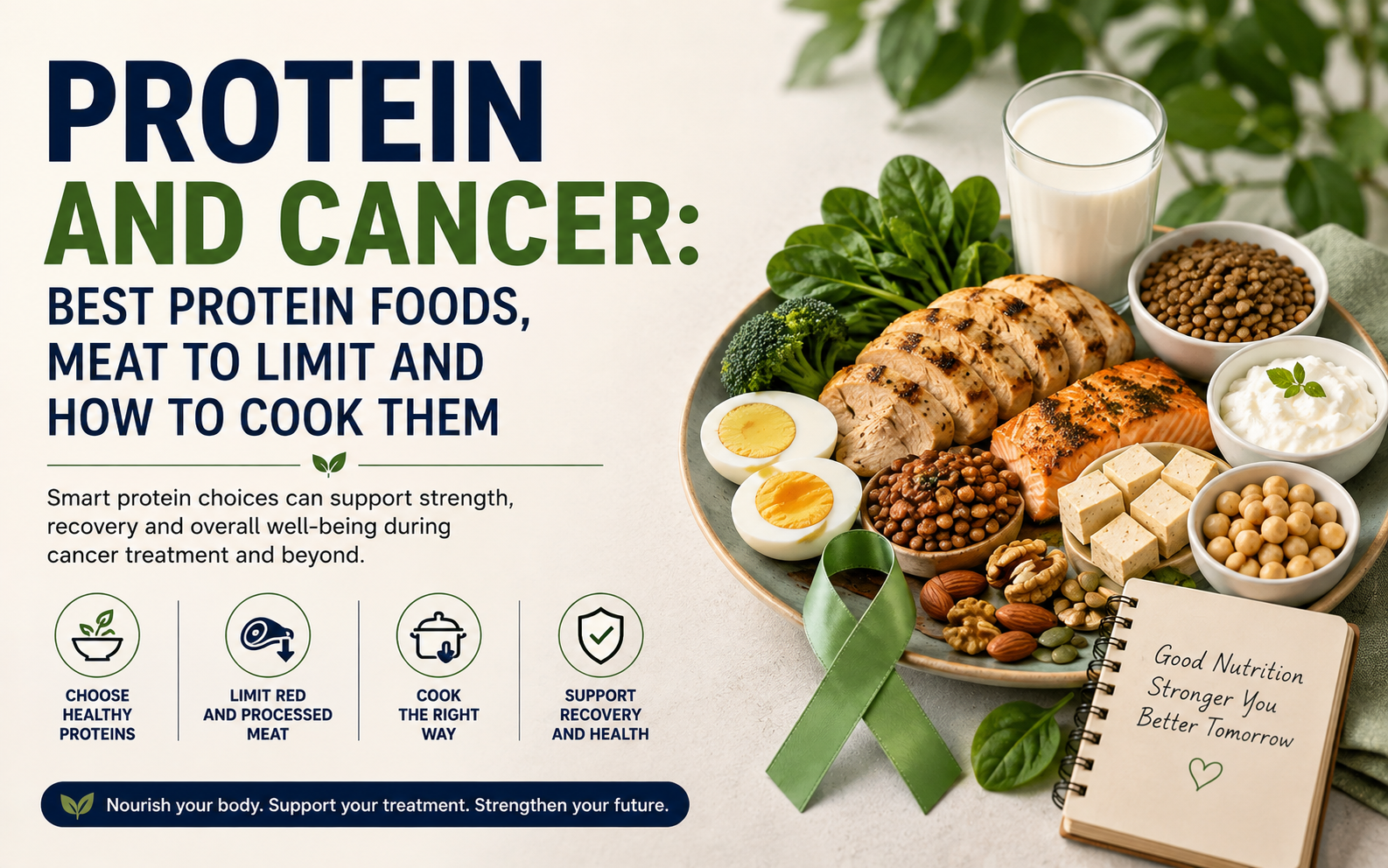
Protein is an important part of nutrition during cancer treatment and recovery.
It helps maintain muscle mass, repair tissues, support normal immune function and maintain strength when the body is dealing with cancer, surgery, chemotherapy, radiation therapy or other treatments.
But there is an important misconception about protein and cancer:
More protein is not always better.
For someone with cancer, the important questions are:
- How much protein do I need?
- Which protein foods are best?
- Can I eat chicken, eggs, fish or paneer?
- Is mutton considered red meat?
- Should cancer patients avoid meat?
- Are sausages and salami harmful?
- Does the way meat is cooked matter?
- Can I take protein powder during chemotherapy?
The answers depend on the individual’s cancer, treatment, nutritional status, weight, appetite and other medical conditions.
This guide explains what cancer patients and cancer survivors should know about protein, meat, cancer nutrition and healthy food choices.
Why Is Protein Important During Cancer Treatment?
Protein is one of the body’s essential building blocks.
During cancer treatment, adequate protein can help support:
- Muscle maintenance
- Tissue repair
- Wound healing
- Physical strength
- Recovery after surgery
- Nutritional status
- Recovery during cancer treatment
Cancer and its treatments can sometimes reduce appetite or make eating difficult. Nausea, vomiting, mouth sores, taste changes, swallowing difficulties, fatigue and other treatment-related side effects may make it harder to consume enough food.
This can contribute to weight loss and loss of muscle mass.
This is why protein should not automatically be restricted simply because someone has cancer.
The better question is: What amount of protein is appropriate for my individual condition, and which foods are the best sources?
How Much Protein Should a Cancer Patient Eat?
There is no single protein requirement that applies to every cancer patient.
Protein needs can depend on:
- Body weight
- Age
- Cancer type and stage
- Current treatment
- Weight loss
- Muscle mass
- Nutritional status
- Physical activity
- Kidney function
- Liver function
- Other medical conditions
Clinical nutrition guidance commonly recommends that protein intake for people with cancer should generally be above 1 gram per kilogram of body weight per day and, when possible, up to approximately 1.5 grams per kilogram per day, depending on the individual’s situation.
| Body Weight | Approximate Protein Range |
|---|---|
| 60 kg | More than 60 g, up to around 90 g/day |
| 70 kg | More than 70 g, up to around 105 g/day |
| 80 kg | More than 80 g, up to around 120 g/day |
Important: These numbers are not individual prescriptions.
Someone who is losing weight or experiencing malnutrition may have different requirements. Someone with kidney disease or another medical condition may also need a different nutritional plan.
Cancer patients should not determine their protein requirements solely from an online calculator. An oncologist and oncology dietitian can help determine an appropriate nutritional target.
Does Eating More Protein Mean More Muscle?
Not necessarily.
This is one of the most common misconceptions about protein.
Maintaining muscle during and after cancer treatment depends on several factors, including:
Adequate protein + adequate calories + appropriate physical activity + overall nutrition + effective cancer treatment
Once nutritional requirements are being met, simply consuming very large amounts of protein does not automatically result in more muscle.
For many cancer patients, the priority is to prevent muscle loss and malnutrition, rather than consuming excessive amounts of protein.
What Are the Best Protein Foods for Cancer Patients?
There is no single “best protein” for everyone with cancer.
A balanced cancer nutrition plan can include a variety of protein sources.
- Dal and lentils
- Beans and chickpeas
- Soy and tofu
- Fish
- Eggs
- Milk and curd
- Paneer
- Fresh chicken and other poultry
- Nuts and seeds
1. Dal, Lentils and Pulses
Indian diets have a major advantage when it comes to plant-based protein.
Foods such as moong dal, masoor dal, chana, rajma, lobia, chickpeas, sambar and other pulses can provide protein along with fibre and other nutrients.
For many patients, including pulses regularly is a practical way to increase protein without relying heavily on meat.
2. Soy and Tofu
Soy foods can be useful sources of plant-based protein.
- Tofu
- Soybeans
- Edamame
- Tempeh
- Soy chunks
- Unsweetened soy milk
For most people, there is no reason to automatically eliminate normal amounts of whole soy foods from a balanced diet.
However, individual dietary advice may be appropriate depending on the person’s cancer, treatment and other medical factors.
3. Fish
Fish is a nutrient-rich source of protein and can be a useful alternative to red meat.
Depending on availability and preference, options can include sardines, mackerel, rohu, pomfret, salmon and other locally available fish.
Fish can be prepared using steaming, baking, poaching, light pan cooking or pressure cooking.
Deep-frying is not necessary to make fish part of a healthy diet.
4. Eggs
Eggs are an affordable and convenient source of high-quality protein.
One medium egg provides approximately 6 grams of protein.
Eggs can be prepared as boiled eggs, omelettes, egg bhurji, scrambled eggs or egg curry.
During cancer treatment, food safety is particularly important for some patients. If your treating team has recommended additional food-safety precautions, avoid raw or undercooked eggs and follow their specific advice.
5. Milk, Curd, Yogurt and Paneer
Dairy foods can contribute protein and other nutrients.
- Milk
- Curd
- Yogurt
- Greek yogurt
- Paneer
- Cottage cheese
The best choice depends on calorie requirements, tolerance and individual medical needs.
6. Chicken and Other Poultry
Fresh chicken can be a useful protein source.
Examples include home-cooked chicken, chicken soup, baked chicken, steamed chicken and lightly prepared chicken curry.
However, there is an important distinction between fresh chicken and processed chicken products.
Chicken sausages, nuggets, luncheon meats and other processed poultry products may contain high amounts of salt and other additives.
Can Cancer Patients Eat Red Meat?
Yes, but red meat should be limited rather than treated as the main protein source.
Red meat includes meat from mammals such as beef, mutton, lamb, pork and goat.
Goat meat is also classified as red meat.
Red meat provides useful nutrients including protein, iron, zinc and vitamin B12.
However, higher consumption of red meat is associated with an increased risk of colorectal cancer.
The World Cancer Research Fund recommends limiting red meat to approximately 350–500 grams of cooked weight per week, or no more than about three portions. This is a limit, not a target.
Is Mutton Red Meat?
Yes.
Mutton is red meat because it comes from a mammal. Goat meat is also classified as red meat.
If you eat mutton, include it within your overall weekly red-meat intake.
Is Mutton Bad for Cancer Patients?
Mutton does not necessarily need to be completely eliminated from the diet of every cancer patient.
However, because it is red meat, it should be consumed in moderation.
The concern is particularly about regularly consuming large amounts of red meat, rather than suggesting that one meal containing mutton will cause cancer.
A balanced approach is to keep red meat moderate while including more plant proteins, fish, eggs and poultry.
What Is Processed Meat?
Processed meat is meat that has been transformed through processes such as curing, smoking, salting, fermentation or other preservation methods.
Examples include:
- Bacon
- Salami
- Sausages
- Ham
- Hot dogs
- Pepperoni
- Chorizo
- Certain deli meats
- Luncheon meats
- Some meat jerky
The evidence linking processed meat with colorectal cancer is strong. Processed meat is classified by IARC as carcinogenic to humans based on the available evidence.
Processed meat should not be a routine part of your diet.
Does Processed Meat Cause Cancer?
Processed meat has been classified as carcinogenic to humans because there is sufficient evidence that consuming it can cause cancer, particularly colorectal cancer.
This does not mean processed meat is as dangerous as smoking.
The classification describes the strength of evidence that an exposure can cause cancer. It does not mean that all carcinogenic exposures carry the same level of risk.
Does the Way You Cook Meat Affect Cancer Risk?
Yes, cooking method matters.
Cooking meat at very high temperatures, particularly over direct flames, can produce compounds such as:
- Heterocyclic aromatic amines (HCAs)
- Polycyclic aromatic hydrocarbons (PAHs)
These compounds can damage DNA in experimental settings and are one reason heavily charred or burnt meat is best avoided.
Is Grilled or Charred Meat Bad for Cancer?
The important distinction is between grilled food and heavily charred food.
You do not need to be afraid of every grilled meal.
However, it is sensible to:
- Avoid burning meat
- Remove heavily blackened portions
- Avoid prolonged direct exposure to intense flames
- Turn meat regularly while cooking
- Avoid overcooking
- Use moderate cooking temperatures where practical
- Avoid making heavily charred red meat a regular part of your diet
The goal is risk reduction, not fear of food.
Which Cooking Methods Are Better for Protein Foods?
Prefer More Often
- Steaming
- Boiling
- Poaching
- Pressure cooking
- Slow cooking
- Baking
- Moderate-temperature cooking
Limit
- Deep frying
- Very high-temperature frying
- Prolonged direct-flame cooking
- Barbecuing until heavily charred
- Eating burnt or blackened meat
What Protein Foods Should Cancer Patients Eat More Often?
Choose More Often:
Dal, lentils, beans, chickpeas, rajma, tofu, soy foods, fish, eggs, curd, yogurt, milk, nuts, seeds and fresh poultry.
Eat in Moderation:
Mutton, beef, lamb, pork, goat, other red meats and high-fat meat preparations.
Minimise:
Bacon, salami, sausages, hot dogs, ham, pepperoni, processed deli meats and other cured or processed meats.
Avoid regularly eating meat that has been heavily charred or burnt.
How Should a Cancer Patient Build a Healthy Plate?
Instead of focusing only on protein, think about the overall meal.
½ Plate: Vegetables and other suitable plant foods.
¼ Plate: Whole grains or other carbohydrate sources such as rice, roti, whole wheat, oats, millets or quinoa.
¼ Plate: A protein source such as dal, beans, fish, chicken, eggs, tofu or paneer.
However, this is not a rigid rule for every cancer patient.
Someone experiencing weight loss, poor appetite or malnutrition may require more calories and protein and may need a different meal pattern.
Should Cancer Patients Spread Protein Throughout the Day?
For many people, spreading protein-containing foods across several meals can be a practical way to meet daily nutritional needs.
Instead of consuming most of your protein at dinner, you could include a protein source at breakfast, lunch and dinner.
Example:
Breakfast: Eggs + curd OR moong dal chilla + curd
Lunch: Dal + vegetables + rice/roti + curd
Snack: Roasted chana or yogurt
Dinner: Fish/chicken/tofu/paneer + vegetables + rice/roti
What Should Cancer Patients Eat If They Have No Appetite?
Loss of appetite is common during cancer treatment.
Some patients experience nausea, vomiting, taste changes, mouth sores, difficulty swallowing, early fullness, fatigue or reduced appetite.
In these situations, smaller meals and snacks throughout the day may be easier to tolerate.
Protein can be added to foods such as:
- Curd
- Milk
- Yogurt
- Smoothies
- Eggs
- Dal
- Paneer
- Tofu
- Soft fish
- Lentil soups
- Nut butters
If weight continues to fall or food intake remains inadequate, speak with your treating oncologist or oncology dietitian.
Are Protein Powders Safe During Chemotherapy?
Protein powders are not automatically good or bad.
They are simply a convenient way of adding protein.
Some cancer patients may benefit from protein supplements when they cannot meet their nutritional requirements through normal food because of poor appetite, weight loss, difficulty swallowing, treatment side effects or increased nutritional requirements.
However, more protein is not automatically better.
A supplement should be selected according to the patient’s nutritional needs and medical condition.
Patients with kidney disease, liver disease or other medical conditions may need specific advice before using supplements.
What Should Cancer Patients Eat During Chemotherapy?
There is no universal “chemotherapy diet.”
Different cancer treatments can cause different side effects.
- Nausea
- Vomiting
- Diarrhoea
- Constipation
- Mouth ulcers
- Taste changes
- Difficulty swallowing
- Loss of appetite
Therefore, nutrition during chemotherapy should be adjusted according to the individual’s symptoms and nutritional needs.
Adequate calories + adequate protein + hydration + maintaining muscle mass + managing treatment-related symptoms
Cancer nutrition should be personalised rather than one-size-fits-all.
Food Safety During Cancer Treatment
Nutrition is not only about what you eat. Food safety also matters.
Some cancer treatments can weaken the immune system, making food hygiene particularly important.
Depending on your treatment and immune status, you may need to take extra care with:
- Raw eggs
- Undercooked meat
- Undercooked fish
- Unpasteurised dairy
- Poorly handled food
- Cross-contamination
Use clean utensils and appropriate food preparation practices.
Your oncology team can advise you about the precautions that are appropriate for your specific treatment.
A Simple Indian Protein Plan for Cancer Patients
A healthy cancer diet does not have to depend on expensive or imported foods.
Breakfast
Moong dal chilla + curd
OR
Egg and vegetable omelette
OR
Oats + milk + nuts
Lunch
Dal + vegetables + rice/roti + curd
OR
Rajma or chole + vegetables + rice
Evening Snack
Roasted chana, yogurt, milk, or nuts/seeds depending on individual requirements.
Dinner
Fish + vegetables + rice/roti
OR
Chicken + vegetables + roti
OR
Tofu or paneer + vegetables + whole grain
Red meat: If you eat red meat, keep portions moderate and include it within your overall weekly intake.
Processed meat: Avoid making processed meat a routine part of your diet.
What Should Cancer Survivors Eat After Treatment?
Cancer nutrition remains important even after chemotherapy, radiation therapy or surgery has been completed.
For long-term health, focus on a dietary pattern that includes:
- Vegetables
- Fruits
- Whole grains
- Pulses and beans
- Nuts and seeds
- Fish
- Poultry
- Other healthy protein sources
Regular physical activity and maintaining a healthy body weight are also important components of long-term health.
At the same time, limit processed meat, excessive red meat, highly processed foods, excess calories and sugar-sweetened beverages.
Protein and Cancer: What Is the Bottom Line?
Protein is not the enemy.
For many cancer patients, getting enough protein is an important part of maintaining strength, supporting tissue repair and preventing or reducing muscle loss.
The more important question is:
Where does your protein come from?
Choose more often:
Dal • lentils • beans • tofu • soy • fish • eggs • curd • dairy • fresh poultry
Limit:
Red meat such as mutton, beef, lamb and goat
Minimise:
Processed meats such as bacon, salami, sausages, ham and hot dogs
Avoid burning and heavy charring.
Most importantly, remember that cancer nutrition is individualised.
5 Things to Remember About Protein and Cancer
- Protein is important during cancer treatment. Adequate protein can help support muscle maintenance, tissue repair, strength and recovery.
- More protein is not automatically better. Protein requirements should be based on individual nutritional needs.
- Choose a variety of protein sources. Include plant proteins, fish, eggs, dairy and fresh poultry according to your preferences and medical needs.
- Limit red meat and minimise processed meat. Mutton and goat are red meat. Foods such as salami, bacon, sausages and ham are processed meat.
- Avoid heavily charred or burnt meat. Prefer cooking methods that avoid prolonged exposure to very high temperatures and direct flames.
Good cancer nutrition is not about fear. It is about making sensible, sustainable choices that support your health during treatment and beyond.
Frequently Asked Questions About Protein and Cancer
Is protein good for cancer patients?
Yes. Protein is an important nutrient for maintaining muscle, supporting tissue repair and helping the body maintain strength during cancer treatment and recovery.
How much protein should a cancer patient eat per day?
Protein requirements vary. Clinical nutrition guidance commonly recommends protein intake above 1 g/kg/day and, when possible, up to approximately 1.5 g/kg/day, depending on the patient’s condition.
Can cancer patients eat chicken?
Yes. Fresh, properly prepared chicken can be a useful protein source. Fresh poultry is different from processed poultry products such as sausages and luncheon meats.
Can cancer patients eat eggs?
Yes. Eggs can provide high-quality protein. Patients undergoing treatments that require additional food-safety precautions should follow their oncology team’s advice regarding egg preparation.
Can cancer patients eat fish?
Yes. Fish can be an excellent protein source and can be included as an alternative to red meat.
Is mutton red meat?
Yes. Mutton is classified as red meat. Goat meat is also red meat.
Is mutton bad for cancer patients?
Mutton does not necessarily need to be completely avoided, but it should be consumed in moderation because it is red meat.
Is processed meat carcinogenic?
Processed meat is classified by IARC as carcinogenic to humans based on evidence linking it to colorectal cancer. Examples include bacon, ham, salami, sausages and hot dogs.
Is grilled meat bad for cancer?
Cooking meat at very high temperatures or directly over flames can produce compounds such as HCAs and PAHs. Avoiding heavily charred or burnt meat is a sensible risk-reduction approach.
Can cancer patients eat grilled chicken?
Grilled chicken does not automatically need to be avoided. The important consideration is to avoid burning or heavily charring the meat.
Is protein powder safe during chemotherapy?
Protein supplements can be useful for some patients who cannot meet their nutritional requirements through food. They are not necessary for everyone and should be chosen according to individual nutritional needs.
What is the best protein for cancer patients?
There is no single best protein. A varied diet containing pulses, beans, soy, fish, eggs, dairy and fresh poultry can provide useful protein while red meat is kept moderate and processed meat is minimised.
Should cancer patients stop eating meat completely?
Not necessarily. Cancer patients do not automatically need to follow a vegetarian diet. However, a balanced eating pattern can prioritise plant proteins, fish and poultry while limiting red meat and minimising processed meat.
About Dr. Saadvik Raghuram Y
Dr. Saadvik Raghuram Y is a Director in Medical Oncology & Hemato-Oncology at CARE Hospitals, Banjara Hills, Hyderabad.
His clinical practice encompasses medical oncology and hemato-oncology, including chemotherapy, targeted therapy, immunotherapy and precision oncology.
Dr. Saadvik Raghuram believes that comprehensive cancer care extends beyond treating the tumour. Nutrition, physical health, symptom management, treatment recovery and long-term survivorship are important components of cancer care.
Patients undergoing cancer treatment should discuss their individual nutritional requirements with their treating oncologist and, when appropriate, an oncology dietitian.
Need Personalised Cancer Nutrition Advice?
Cancer nutrition needs can vary depending on the cancer type, treatment, appetite, weight, nutritional status and other medical conditions.
If you are undergoing cancer treatment or recovering after treatment and have questions about nutrition, protein intake or treatment-related eating difficulties, discuss your individual needs with your oncology team.
Medical Disclaimer
This article is intended for general educational and informational purposes only. Nutrition requirements during cancer treatment vary from person to person. The information provided here should not replace medical advice, diagnosis or treatment from your oncologist, oncology dietitian or other qualified healthcare professional.
Protein is an important part of nutrition during cancer treatment and recovery. …
By Dr. Saadvik Raghuram, Director of Medical Oncology & Hemato-Oncology, MD ( …
By Dr. Saadvik Raghuram, Director of Medical Oncology & Hemato-Oncology, MD ( …
By Dr. Saadvik Raghuram — Medical Oncologist in Hyderabad Colorectal cancer was …
Every year on May 8th, World Ovarian Cancer Day raises awareness about …
Why More Young Adults Are Developing Colorectal, Pancreatic & Other GI Cancers …

